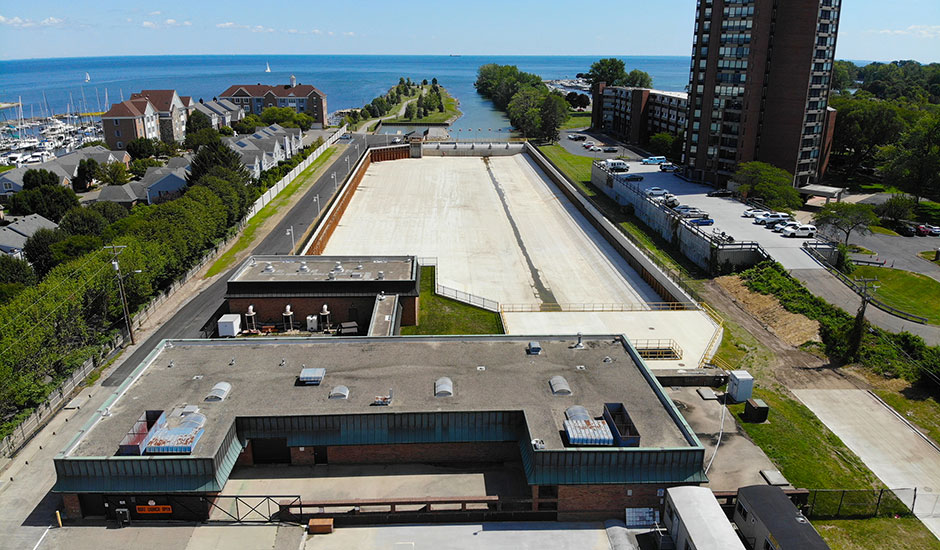
The Chapaton Retention Treatment Basin (RTB) has been providing wet weather relief to Macomb County communities since the mid-1960s. The 28-million-gallon (MG) RTB collects combined stormwater and sanitary flows and provides treatment using chlorination and settling before discharging to nearby Lake St. Clair via a pump station and downstream outfall canal. To better protect water quality and eliminate basement flooding during large rain events, the Macomb County Public Works Office (MCPWO) expanded the canal and added a new gate structure. The rehabilitation enables the facility to retain and treat an additional 17 MG of flow to reduce treated combined sewer overflows (CSO) by 50%. It also allows the MCPWO to send more captured flow back through the RTB to the GLWA Water Resource Recovery Facility for full treatment. Wade Trim provided design and construction oversight for the project.
Key design elements were considered to maximize the capture volume within the practical limits of the site. Comprehensive geotechnical, hydraulic, and site engineering evaluations were performed to optimize storage and address regulatory agency requirements for environmental clearances and construction permits. Approximately 700 LF of the existing canal cross section was converted into additional storage by increasing the width and depth. Steel sheeting was installed to raise the top of the treatment canal above the 500-year flood elevation, further protecting adjacent properties.
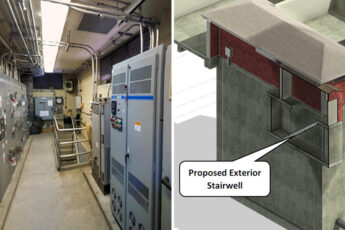
The new gate structure includes inflatable top-down weir gates, a control building, and bypass conduit with a slide gate to allow operators better control of water levels in the open-storage canal. The project also included improvements to the basin flushing system and storm drain outfall structure, removal of the old gate structure, and separation of the 9 Mile Sewer. In addition, aesthetics for neighboring residents, public access and recreational amenities were upgraded.
During construction, several changes and additions to the original design were successfully addressed in a timely manner to keep the project on track. The team’s adaptability was critical to maintaining the project’s momentum. Strong collaboration and communication between Wade Trim, the contractor, and the MCPWO were key to achieving the project goals. The canal rehabilitation is the final step in achieving the MCPWO’s overarching goal of a 75% total reduction in treated CSOs within the 8.5 Mile Relief Drain Drainage District, demonstrating measurable progress and regional impact.
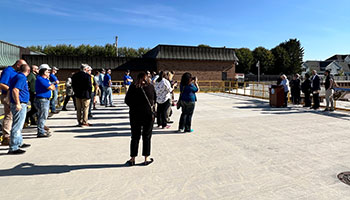
A Press Event led by Candice Miller, Macomb County Public Works Commissioner, was held on September 16 to share information about the Canal Rehabilitation project and celebrate its completion.