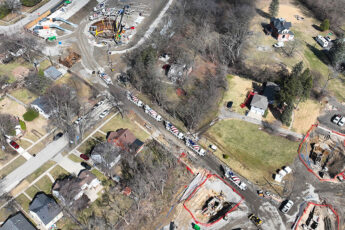

To provide a roadmap for long-term control measures to protect the environment and improve water quality, communities across the country have developed Combined Sewer Overflow (CSO) Long-Term Control Plans (LTCP). These phased approaches to achieve water quality standards allow for systematic reduction of CSOs to comply with Clean Water Act requirements. The Mon Valley Sewage Authority in Donora, PA, is in its third and final phase of a 12-year, $50-million CSO LTCP intended to reduce overflow discharge to the Monongahela River by 110 MG (million gallons) per year and fulfill the Authority’s National Pollutant Discharge Elimination System (NPDES) permit. Wade Trim designed and is overseeing construction of the Authority’s final project that will eliminate an additional 18 MG of CSO annually.
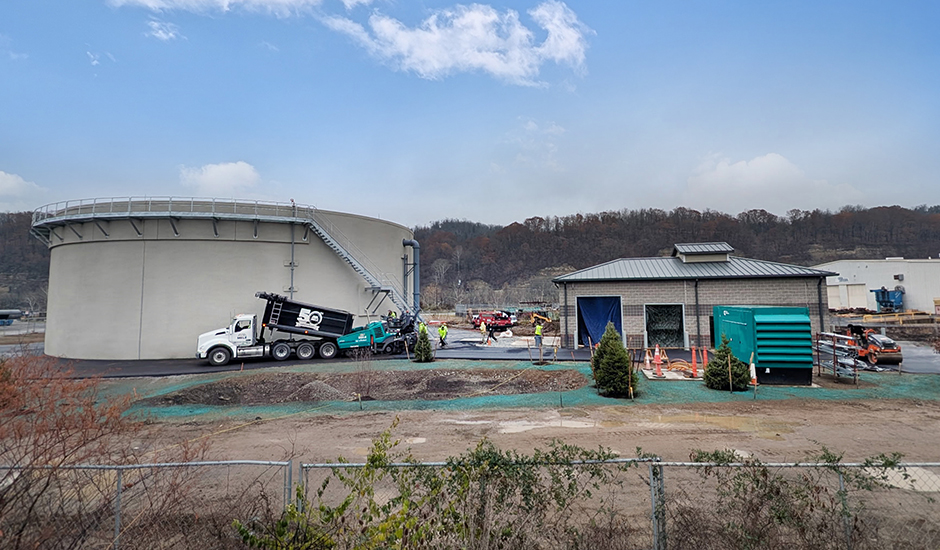
The project consists of a 2-MG equalization (EQ) tank, a 15-MGD (million gallons per day) pump station and screening facility, and 1,200 linear feet of 12- to 36-inch-diameter conveyance sewers. The EQ tank replaces a CSO High Rate Treatment (HRT) facility specified in the original Plan to realize cost savings for the same volume of flow captured. The EQ tank will allow for full biological treatment of combined sewage at the Authority’s main wastewater treatment plant (WWTP), as opposed to only primary treatment that would have been provided by an HRT facility, before discharging to the river. This Phase’s three contracts were awarded at a total low-bid construction cost of $13.8 million, with construction expected to be complete in early 2026.
Wade Trim has served as Engineer of Record for the Authority since 2015 and provided construction management and full-time observation services for Phase II projects that included sewer separation to eliminate 9 CSOs, rehabilitation of 22,000 linear feet of collection sewer, and construction of a 44-MGD CSO HRT facility across the Monongahela River from the main WWTP.