
The Central Combined Sewer Overflow (CSO) Retention Treatment Basin (RTB) is being constructed by the Charter Township of Redford, MI, to better protect public health and local waterways. During wet weather, inflows from combined sewer areas can overwhelm the capacity of the system, causing CSOs to the Bell Branch of the Rouge River. While the Township’s Northern RTB has effectively controlled CSO in its area, the new RTB will control six outfalls in the central area. Wade Trim designed the Central CSO RTB, an influent pump station, and approximately 3.5 miles of new collector sewers to convey flows to the basin. Construction engineering and inspection services are also being provided.
Mandated by the Township’s National Pollutant Discharge Elimination System (NPDES) Permit, an aggressive, 9-month design timeline was needed to meet Clean Water State Revolving Fund requirements and permitting approvals. RTB site selection and collector sewer routing required careful analysis to determine the most feasible and least disruptive options through residential neighborhoods. In addition, the Township’s CSO hydraulic and hydrologic model was updated and calibrated using temporary flow meters and precipitation gauges to quantify CSO peak flow rates and volumes that must be controlled under design storm conditions.
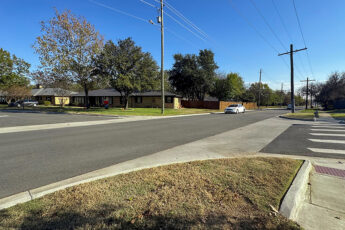
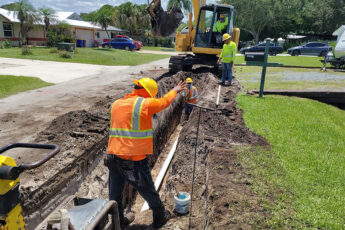
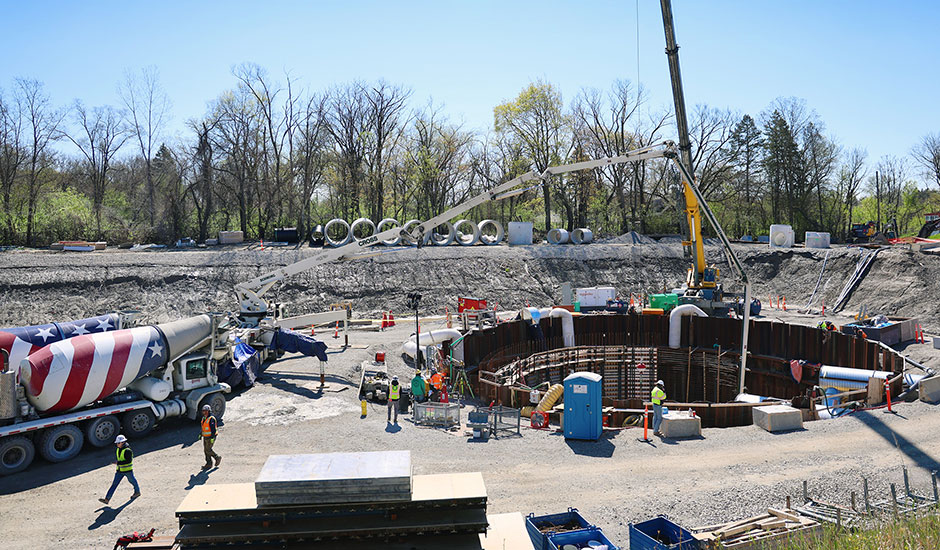
The RTB was designed to provide up to 198 million gallons per day (MGD) of pumping and treatment capacity and 1.45 million gallons (MG) of underground storage. Peak flows from a 10-year, 1-hour design storm will receive 20 minutes of disinfection contact and settling time. Flows from the six modified CSO outfalls will be conveyed to the RTB through 1,800 LF of 15-inch force main and 3.3 miles of 48- to 78-inch interceptor sewers. Routed through constrained residential rights-of-way, the sewers are being installed via open cut and trenchless methods under narrow residential roads at depths up to 30 feet to minimize impacts. Multi-barrel siphons in a 102-inch bored casing are being used for creek crossings.
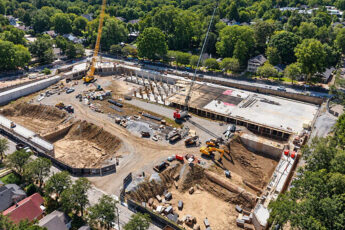
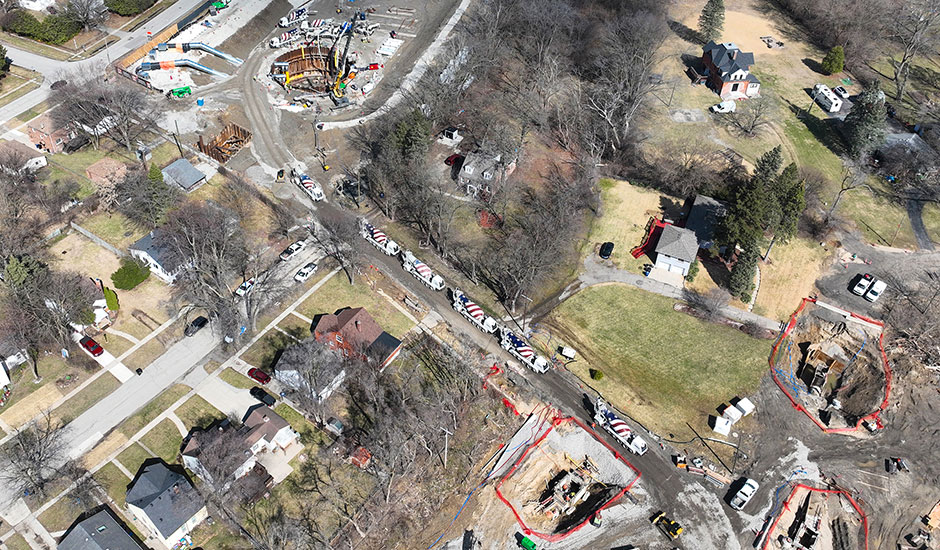
On site daily since construction began in the fall of 2025, our construction engineering and inspection team is making sure lines and specifications are followed, monitoring the contract, and managing site modifications and resulting change orders. We work closely with the contractor, meeting regularly to address technical questions and proactively reviewing plans to keep the project on track. Drone flights are being used to verify volumetric calculations, allowing us to quickly and accurately measure soil displacements, and track construction progress. Project completion is anticipated for fall 2027.