
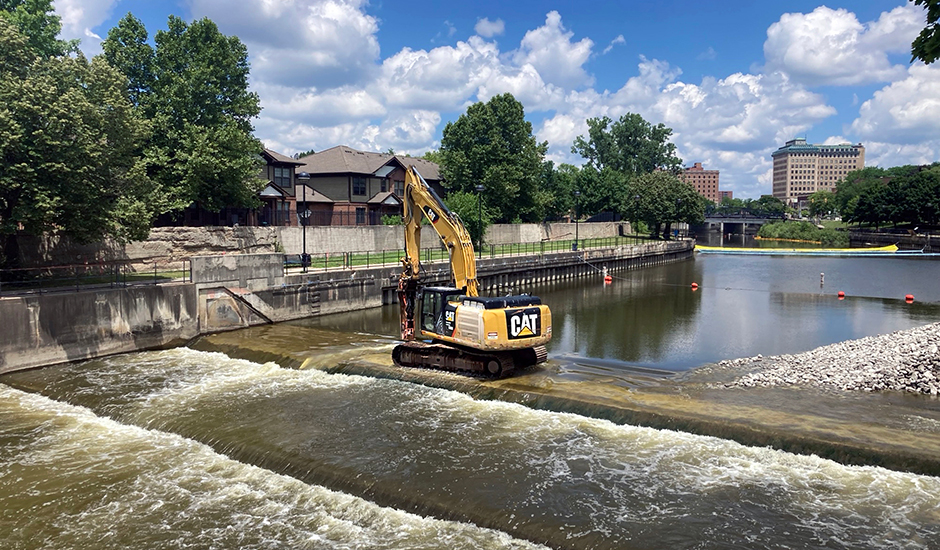
A decades-long effort to revitalize the City of Flint’s downtown riverfront corridor is progressing with in-river enhancements and safety and accessibility upgrades. Projects are guided by the 2010 Flint Riverfront Restoration Plan completed by Genesee County Parks and the City of Flint. The plan is intended to transform 3 miles of the Flint River and 230 acres of surrounding upland with water- and land-based recreation, flood control, ecosystem restoration, and community connectivity improvements. To date, the Hamilton and Fabri Dams have been removed to restore stream and river habitat, and green infrastructure and recreational enhancements have been completed. Wade Trim has been involved in the restoration efforts from planning and conceptual work through community engagement, design, and construction.
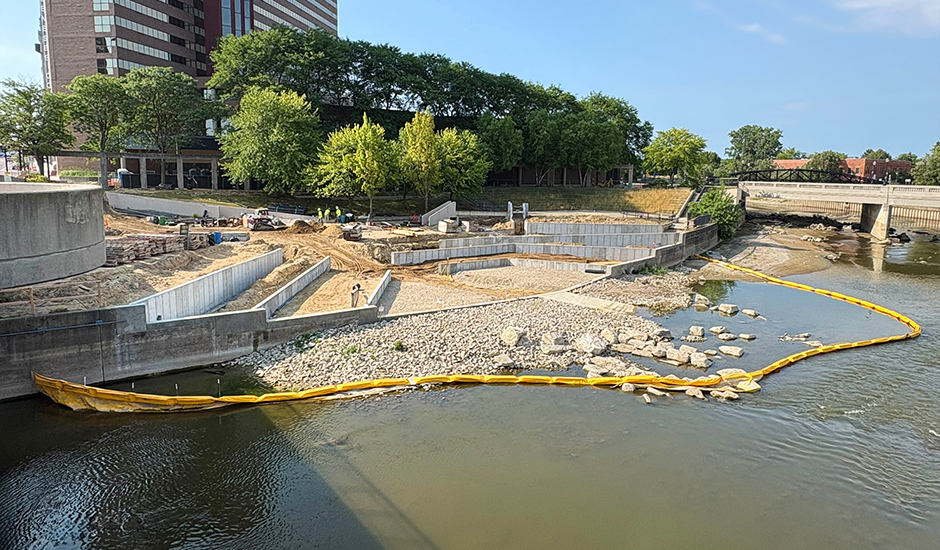
In-river restoration work encompassed physical, naturalized improvements to the Flint River to manage river flow and minimize flood risk in the absence of the dams. Multiple rock rapid areas, or “riffles,” were constructed within the main channel. Each area consists of a rock drop structure to transition water surface elevations. The rock rapids allow fish passage upstream and small watercraft passage downstream while providing resting pools for fishing. Riverbank work softened existing concrete and incorporated sheet metal retaining walls with lower pedestrian terraces that allow users to interact with the water’s edge. The design complements the historic landscape, originally designed by Lawrence Halprin, and significantly upgrades sustainability, safety, and recreation.
Minimizing disruption to the river and previous environmental remediation was critical. After a major Michigan utility removed contaminated sediments from a manufactured gas plant in 2017, the riverbed was rebuilt and capped to restore it to a natural state. Wade Trim coordinated the new design and construction to avoid affecting previous remediation. Typically, sheet piles are driven into a riverbed to block water from areas of work. In collaboration with Granger Construction, Wade Trim recommended using an inflatable cofferdam to dewater the workspace. The inflatable dam at the bottom of the river caused the least amount of disruption to river flow.
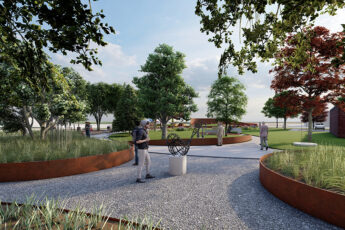
Work on core locations on either side of Saginaw Street where it crosses the river began in early 2026. Accessibility, safety, and aesthetic updates to two of eight blocks are underway, with Lurvey Construction leading the effort. Planned improvements include renewal of the riverfront Amphitheater and Market Stall blocks, new lighting along the river, site repairs, more river access points, new sidewalks, and retrofitting existing amenities to continue the vision for a contiguous riverbank experience.
The Flint Riverfront Restoration’s next phase will encompass the remaining block improvements at Riverbank Park, the Iron Belle Trail, and Vietnam Veterans Park.